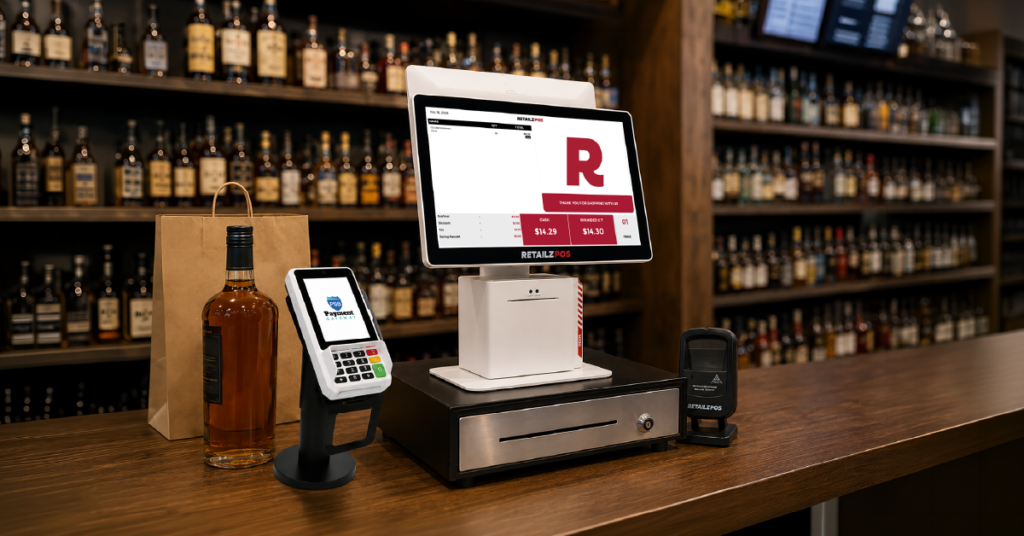
Walk into any liquor store on a Friday evening, and you’ll see the same story playing out at the register: a steady stream of card taps, chip insertions, and contactless payments. Cash is becoming the exception, not the rule. While this effortless experience is great for consumers, it creates a hidden cost for the liquor store owners, who have to pay a processing fee on every single one of those card taps.
For an industry that already runs on the narrowest of margins, credit card processing fees feel like a direct hit to the bottom line on every sale. The good news? A growing number of owners are taking control of these costs by adopting a liquor store dual pricing POS system. By showing both cash and card prices at checkout, this setup wipes out processing fees, protects your profits, and keeps pricing clear for customers.
In this guide, we’ll learn in detail about how it works, why it matters specifically for liquor store owners, and how the right liquor store POS system can simplify the entire payment process.
Why Credit Card Fees Hit Liquor Stores Harder?
On paper, running a liquor store looks easy. Inventory moves fast, and customers buy every day. But ask any store owner, and they’ll tell you margins are razor-thin. Between high taxes, license fees, and tough competition, there’s little room for extra costs. That’s why credit card processing fees hurt so much. Without a plan to offset those swipe fees, you’re giving away a huge chunk of your profit every year.
For liquor stores, these credit card fees sit in a uniquely painful spot. Here’s why:
High average ticket sizes:
Wine, spirits, and craft beer purchases are comparatively more expensive than a typical convenience store basket. Because interchange fees are calculated as a percentage of the transaction (usually 1.5%-3.5%), higher ticket prices mean more dollars lost per sale.
Small margins to start with:
Alcohol is tax-overwhelmed and tightly regulated. Between state excise laws, costly licensing fees, and aggressive pricing from retail chains, independent liquor store margins are squeezed from the beginning.
Card-heavy customer base:
Liquor purchases tend to peak during evenings and weekends, exactly when consumers are least likely to be using cash. This means more transactions are processed through alcohol retail payment systems, where processing fees apply.
Seasonal spikes:
Holidays, game days, and celebrations lead to sales rushes, and every one of those transactions comes with a fee attached. During the high season, that little 2-3% fee can add up to thousands of dollars in lower earnings.
In a few words, liquor retailers process more dollars per swipe, more commonly, on shorter margins than almost any other store category. This is the only reason why most retailers are seeking a way to counterbalance or avoid this cost completely.
What Exactly is a Liquor Store Dual Pricing POS System?
A dual pricing POS system is technology that allows a retailer to display and charge two different prices for the same item: one price for cash payments, and a slightly higher price for card payments. Instead of slapping customers with a frustrating surcharge at checkout, dual pricing twists the cost right into your standard cash discount setup. The price they see on the tag already covers the processing fee, making the whole experience feel seamless.
We’re not talking about a temporary fix or playing in a legal gray area. This is a fully compliant cash discount strategy that’s already big in the restaurant and gas station industries, and it’s now taking over liquor stores. Why? Because it simply shifts processing costs to the cards that generate them—all while keeping things completely transparent and fair for your cash-paying regulars.
How it Works at the Register
Here’s the simplified version of how dual pricing POS works in a real store:
- Every product carries two visible prices — a cash price and a slightly higher credit price (the difference typically mirrors the store’s processing cost, often 3–4%).
- When a customer checks out, the POS system automatically detects the payment method.
- If they pay with cash, they’re charged the lower price.
- If they pay with a credit or debit card, the system automatically applies the credit price — no manual math, no awkward conversations, no separate “convenience fee” line item.
- The receipt clearly reflects the applied pricing, keeping everything transparent and above board.
The whole process happens in seconds, and when powered by RetailZPOS, a well-designed liquor store point of sale software, it’s fully automated. The cashier doesn’t need to calculate anything or explain a surcharge.
Dual Pricing vs. Surcharging vs. Cash Discounting: Understanding the Differences
These three terms get thrown around interchangeably, but they are legally and practically different. Understanding this difference matters, specifically for legal dual pricing program adherence.
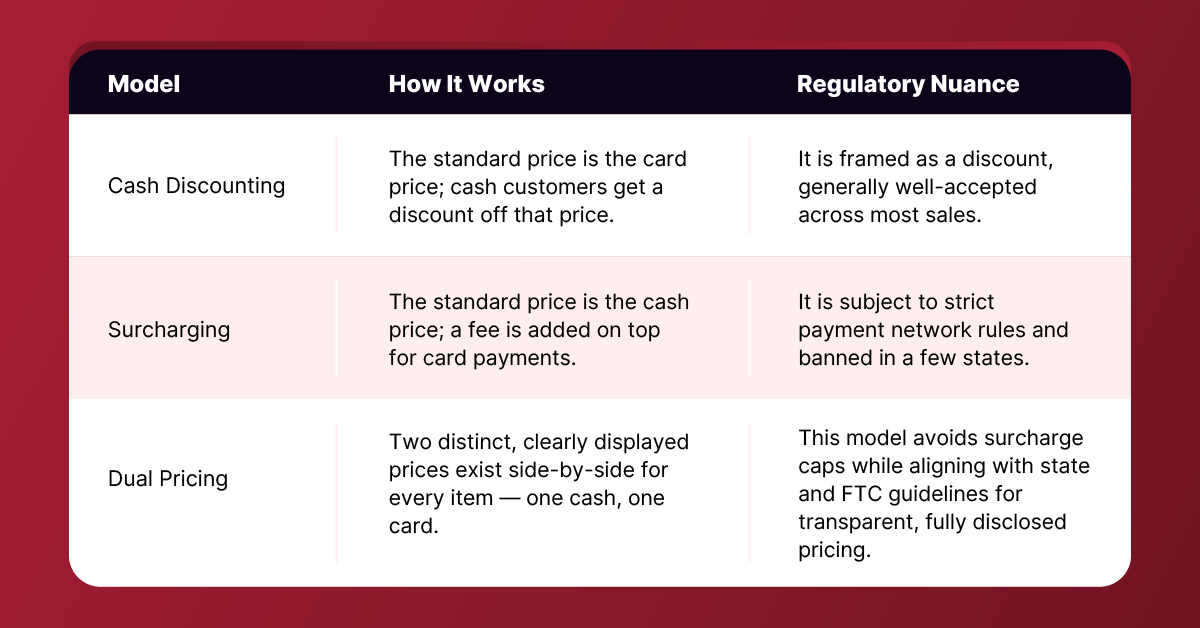
The crucial distinction between surcharging and dual pricing comes down to how prices are displayed and structured. Surcharging adds a fee at checkout to a credit transaction, which triggers card network registration, strict fee caps, and prohibitions in certain states. Dual pricing, when implemented correctly with clearly displayed cash and credit prices before purchase, operates under a separate framework. When properly structured to meet state and network transparency standards, it offers multi-state retailers a consistent, transparent pricing model.
Key Benefits of Dual Pricing for Liquor Store Owners
Direct fee savings:
This is where you see the biggest impact. By shifting card processing costs to card-paying customers, store owners can offset the bulk of their monthly processing expenses. Depending on your store’s sales volume, that can mean keeping hundreds to thousands of extra dollars in your pocket every single month.
Increased cash flow:
Every dollar not paid out in interchange fees is a dollar that stays in the business. Over a financial year, this can significantly improve cash reserves. It gives the freedom to expand stock levels, marketing, or simply build a comfortable safety net for the relaxed seasons.
Designed for Compliance:
Dual pricing meets federal standards and state surcharge laws when set up correctly. Showing both cash and card prices upfront avoids surprise fees at checkout. This approach adheres to major card network rules for cash discounting and keeps compliance risks low.
Customer trust:
It might sound surprising, but dual pricing can actually improve how customers feel about your store. The key is transparency. When both prices are out in the open, shoppers view the system as fair rather than a penalty. Your cash customers love getting a discount. Your card customers appreciate knowing the true cost upfront, with no hidden fees sprung on them at the last second.
Why is a Specialized Liquor POS Essential?
The Manual Effort
Trying to run dual pricing on a general system is a logistical nightmare. It is even worse if you try to perform it manually. Liquor stores carry thousands of items. There are constant inventory changes from seasonal wines, limited releases, sales bundles, and multi-pack discounts.
Calculating and updating two prices for every single item is tiring; keeping your shelf tags up to date is also difficult. This causes wrong prices, legal compliance issues, and frustrated consumers.
The Solution: How RetailZPOS Makes It Flawless
RetailZPOS is the ultimate solution built for a liquor store POS system. Instead of bolting dual pricing onto a generic retail platform, RetailZPOS is made from the ground up to manage the specific challenges of alcohol retail.
Automatic Price Calculations
RetailZPOS implements automated dual pricing POS logic quickly at checkout. The system counts both the cash and credit price for every item in real time, based on your configured fee percentage. There is no risk of human error at the register when you have a smart pos system.
Clear Customer Screens & Receipts
Transparency is the most important part of legal dual pricing, and RetailZPOS ensures every customer-facing screen and printed receipt clearly shows both pricing tiers before the sale is confirmed. This protects your business under federal trade guidelines and creates a great relationship with your shoppers.
Built-In Compliance Support
Every state has different rules, but RetailZPOS keeps things simple. You can easily set your store’s pricing rules, format receipts, and show clear cash-versus-card prices on customer screens and shelf tags. You stay in control, avoid pricing surprises at checkout, and protect your hard-earned profits.
Best Practices for Implementing Dual Pricing in Your Store
Implementing dual pricing successfully takes more than turning a switch on your POS. Here’s how to do it right:
Staff Training:
Your cashiers are the face of this shift. Make sure each team member understands how the cash discount program works, if a customer asks, and knows how to manage the edge cases. When the staff is trained correctly, it turns a confusing pricing change into a smooth, positive customer interaction.
Clear Signage:
Good dual pricing requires clear signs throughout the store. You need to post your pricing policy at the entrance, near the shelves, and at the register. Customers must see these signs well before they pay. When shoppers understand the prices early, you will deal with fewer surprises and complaints.
Inventory & Shelf Tag Syncing:
Imagine the frustration when a customer gets to the register and finds out the price is higher than the shelf tag. To avoid this, use pricing software that links right to your store system. When you change a price, your digital or printed labels update instantly on their own. This keeps your store honest and protects your reputation.
Conclusion
Credit card processing fees aren’t going away. But for liquor store owners, they don’t have to be an unavoidable cost of doing business anymore. A well-implemented dual pricing POS system gives you a fully compliant, customer-friendly way to offset processing costs, protect your margins, and keep more revenue in the business where it belongs.
The real difference comes down to choosing the right technology partner. A generic POS system leaves you managing dual pricing manually—item by item—opening the door to errors and compliance headaches. A specialized liquor store POS solution like RetailZPOS handles the heavy lifting: it automates price calculations, keeps receipts transparent, and gives you simple tools to align with state rules, so you can spend your time running your business instead of doing pricing math at the register.
If rising credit card processing fees have been quietly reducing your profit, now is a good time to look at how DUAL pricing, paired with the right POS technology, can put that margin back where it belongs: in your pocket.