What Is Retail Payment Processing? A Complete Guide for Retailers
There is a specific kind of nervous feeling in your stomach when a customer is ready to buy, but your tech won’t let them. We’ve all seen it: the awkward silence while a card reader spins, the frustrated sigh from the person third in line, and, finally, the customer who says, “Never mind” and leaves empty-handed. When a retail payment system lags, it’s not just a technical glitch; it’s a broken promise. It turns a great shopping experience into a stressful exit, leaving staff burned out and customers wondering whether to shop online next time.
Getting a real grip on retail payment processing isn’t about becoming a tech expert; it’s about making sure you aren’t being taken for a ride. When you see precisely how your money moves from a swipe to your bank account, the mystery—and the stress—disappears. You can finally spot the hidden fees that cut into your margins and fix the lag that frustrates your regulars. We’re here to help you move past the “black box” of processing so you can run a shop that’s faster, safer, and keeps more of what you earn.
What Is Retail Payment Processing?
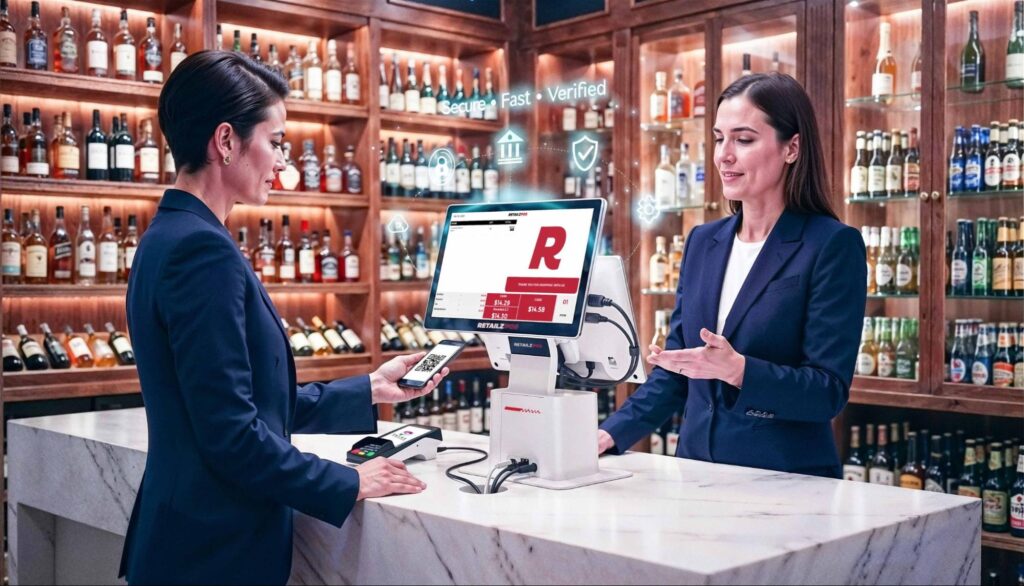
Retail payment processing is the engine that turns a customer’s “yes” into a completed sale. It is the combination of hardware and technology that lets you accept everything from a physical bill to a digital tap. Modern retail point-of-sale systems like RetailzPOS can be incorporated with a payment processor, so every time you make a sale, your POS automatically updates your inventory and accounts. It doesn’t matter if the customer uses a credit card or cash; the system does the math for you, so your records are always correct.
Think of it as the digital security guard for your revenue. This process verifies that the customer has sufficient funds, confirms that the card isn’t stolen, and clears the path for the money to be deposited into your account. Mastering retail payment processing moves you beyond guesswork, ensuring every transaction is secure, verified, and efficiently settled.
For example, when a customer taps for a $150 jacket, retail payment processing coordinates the entire exchange. It automatically checks the card and the funds, ‘capturing’ the money before the receipt even prints.
Definition: The journey from swipe to settlement.
While the person at your counter only sees a “Verification” message for a few seconds, payment processing for the retailer is actually a high-speed conversation between four specific players. Every transaction is a quick conversation between four leading players:
The Customer & Merchant: The two people making the deal happen at the counter or online.
The Payment Gateway: Think of this as the secure bridge. It’s the software that grabs the card information and “locks” it (using encryption) so it can travel safely over the internet.
The Payment Processor: The engine that does the heavy lifting. It acts as a messenger, moving data between the merchant’s store and banks to secure the final “thumbs up” for the sale.
How does the Ecosystem Connect?
The speed of your retail payment processing depends on how well this team communicates under high pressure. As soon as a card is read, your processor acts as a messenger, swiftly transmitting the information through the gateway to reach the customer’s bank. In seconds, it verifies available funds and the cardholder’s authorization.
Once those signals align, the “Cleared” message appears on your screen, confirming the deal. Ultimately, this invisible process is what turns a quick tap at the counter into settled money in your bank account, allowing you to move on to the next customer with total confidence.
Why is efficient payment processing the backbone of retail growth?
To the casual shopper, payment processing is the last step—a tap, a swipe, a click. But for a growing retail business, it’s the first step toward everything that matters. It’s the central nervous system that connects your sales to your strategy, your customers to your future. You can’t build higher without a stronger backbone.
There are reasons why optimized payment processing isn’t just a necessity, but the base of growth:
Building Loyalty through Seamless Checkouts:
Customer loyalty begins at the checkout counter. When payments are quick, effortless, and protected, people have no reason to hesitate or walk away. Shorter lines and hassle-free transactions create a positive final impression, while behind-the-scenes security measures such as encryption and tokenization keep sensitive data protected. This blend of convenience and trust turns one-time buyers into loyal, repeat customers.Integrated checkout experiences also support features like a customer loyalty program, encouraging repeat purchases and long-term customer retention.
Utilizing Every Sales Opportunity:
For the customer and the merchant, checkout is essential. When transactions move quickly, businesses can serve more consumers, keep lines moving, and convert more sales, online and in-store. With innovative payment systems, there are fewer chances of cart abandonment, and flexible payment options like digital wallets and BNPL let customers pay exactly how they want, without a second thought.
Running a Smarter, Leaner Business:
With an automated and advanced payment processor, you eliminate manual errors and save time. Moreover, it provides accurate, real data that helps you manage your inventory. When you have a clear picture of your ins and outs, you can stay in competition in the long term.An advanced payment processor combined with real-time retail inventory management allows store owners to monitor stock levels, reduce losses, and make data-driven decisions.
How Retail Payment Processing Works?
Retail Payment Processing is more than tap-and-go. While it looks like a simple click or swipe to the person at the counter, it’s actually an innovative process designed to keep your numbers right and your checkout lines moving, so you can focus on the people you serve.Modern retailers often rely on an integrated retail POS system to manage payment processing, inventory tracking, and sales reporting in one place. This integration helps reduce manual errors and speeds up the checkout process.
Behind every “Transaction Approved” message is a complex six-step journey:
Initiation: The customer taps or clicks, and the gateway sends the encrypted data to the processor.
Routing: The processor passes the info to the card network.
Verification: The card network checks with the customer’s bank to confirm that the funds are available.
Decision: The bank sends an “Approved” or “Declined” status back up the chain.
Confirmation: The gateway notifies the merchant and customer that the sale is complete.
Settlement: At the end of the day, the funds are transferred from the customer’s bank to the merchant’s bank.
The Different Ways Your Customers Pay
To keep your shop busy, you need a setup that is ready for anything. Today’s shoppers expect to pay their way, whether that’s reaching for cash, swiping a card, or just tapping their phone. By accepting everything from traditional credit and debit cards to contactless mobile wallets, you ensure the ‘how’ never becomes a hurdle for your customers.
Traditional Credit & Debit:
While credit card processing remains the backbone of most shops, the technology behind how we handle those cards has evolved. Given that the industry has moved from magnetic stripes to secure EMV (chip) cards, you now have a built-in defense against “fake card” fraud. This higher level of security is provided when the customer inserts their chip rather than swiping.
Debit cards are a direct line to a customer’s bank account, allowing money to move to your business almost instantly. For many shoppers, it’s the best of both worlds: they get the speed of a card without the risk of overspending, since they can only use what’s actually in their account. For you, it’s a reliable way to get paid, backed by simple security steps like PINs or fingerprint scans that keep the transaction safe for everyone.
Contactless, NFC, and Mobile Wallets:
Customers today love anything that saves them time. Contactless payments and mobile wallets have turned the checkout into a one-second task. The tech behind it (NFC) acts like a secure, short-range bridge between their device and your register. It’s the fastest way to serve people during a rush. Moreover, it is incredibly safe. It uses ‘tokenization’ to hide sensitive data, giving your customers the peace of mind they need to keep coming back.
The rise of “Buy Now, Pay Later” (BNPL) in retail:
BNPL allows customers to split large purchases into smaller, interest-free instalments. Effectively, you receive the full payment upfront while your customer gains immediate financial flexibility. This is no longer a niche trend; in fact, the market reached US$39.65 billion in 2024 and is projected to grow by 30.5% annually through 2033.
In view of this explosive growth, offering these payment plans helps alleviate hesitation about the high price tag. In turn, this often encourages shoppers to add an extra item to their cart. Rather than taking on the risk of a missed payment yourself, you rely on the BNPL provider to handle the debt, allowing you to grow your average sale amount with total peace of mind.
Benefits of Modern Retail Payment Processing
Upgrading your retail payment processing is more than just a tech fix; it is a direct investment in your shop’s growth.For specialty businesses such as tobacco and vape stores, choosing the right payment processing for smoke shops is essential to ensure compliance, fast transactions, and secure card acceptance.
Faster Checkout, More Sales:
Any delay at the register gives a customer time to second-guess their purchase. Essentially, a slow reader or a glitchy screen creates “friction” that can ruin the customer’s experience. Modern POS payment processing ensures that the final step is the easiest part of their visit. When payments are flawless, it reduces waiting lines and increases sales.
Advanced Security That Protects Your Reputation:
Modern processors use tokenization to mask sensitive card numbers. This tech replaces private data with a unique “token” that is useless to hackers in the event of an attempted security threat.
Staying PCI compliant is non-negotiable. Beyond that, it serves as a shield for your business, protecting your customers’ privacy and your reputation simultaneously.Retail payment processing systems must follow PCI DSS security standards to protect sensitive cardholder data and prevent fraud.
Unified Data: Connecting In-Store and Online Sales:
Your online shop and your physical storefront shouldn’t be strangers to each other. A modern payment system connects the two, creating a single ‘brain’ for your business. This means returns, rewards, and inventory are all tracked in one place, regardless of where the sale happened.
Choosing the Right Payment Processor
When you are looking for a payment processing solution for a retailer, prioritize these three factors to keep your margins healthy.
Compare Pricing Models (Interchange-Plus vs. Flat-Rate):
How you are billed for your retail payment systems can be the difference between a thriving business and a struggling one. Broadly speaking, you have two primary choices:
Interchange-Plus: This is the most honest and transparent model. You pay the direct cost from the card networks plus a small, fixed fee to the processor. While the statements look complex, this model saves you a significant amount of money as your sales grow.
Flat Rate: Conversely, you pay a fixed percentage on every sale. It is simple and easy to predict, which is excellent for new businesses. However, as you scale, this model often becomes much more expensive than Interchange-Plus, thereby eating into your profits.
Hassle-Free Hardware & POS Integration:
Your equipment and your software must work together perfectly. Ideally, your processor should integrate directly with your Point of Sale (POS) system. Whenever these retail payment systems are synced, your business runs on autopilot.
In particular, every time a customer pays, your inventory updates instantly while your sales reports remain accurate. You won’t have to spend hours on manual data entry or worry about human error. On the other hand, a “disconnected” system leads to bookkeeping nightmares; whereas an integrated one gives you back your time and peace of mind.
Reliability and 24/7 Mission-Critical Support:
When your payments go down, your business stops. It’s that simple. You need to choose a retail payment system that works for you 24/7 and offers dedicated support, so you never miss a beat.
Notwithstanding the quality of your hardware, issues can occasionally arise. In such cases, having an expert available via phone or chat ensures that your retail payment systems are back online within minutes rather than days. Selecting a provider like RetailzPOS gives you a safety net. By treating your uptime as their top priority, they handle the tech so you can focus on your customers—with expert help always just a call away.
FAQs
1. How long does it take for funds to reach my bank account?
Your sales are typically credited to your account within 24 to 48 hours. Nowadays, many contemporary payment systems offer instant payouts; all you have to do is pay a small fee. This is effective for your holiday sales.
2. What is a Merchant Account?
A merchant account is a type of business bank account that allows you to take digital, debit, and credit card payments. It serves as a safe intermediary between your store and your customers’ banks, enabling you to accept payments via a variety of options without worrying about technical issues.
3. What is a Payment Processor?
Payment processors act as intermediaries between financial institutions and the payment methods customers use. It confirms that the payment has been completed by both the customer and the merchant. Payment processors support all forms of financing and payment, including debit and credit cards, and mobile payment wallets. As such, payment processors enable businesses to offer customers multiple payment options and provide a seamless transaction experience between the customer and the merchant’s bank. Many retailers now support digital wallets such as Apple Pay and Google Pay to offer faster and more convenient checkout options.
4. Why are online (Card-Not-Present) fees higher than in-store fees?
The business must pay higher interchange and processing fees due to increased security requirements. These risks necessitate the use of additional security measures, such as AVS or 3D Secure, which compensate banks and card networks for their exposure to fraud. Online (CNP) levies higher fees as a result. Through higher processing fees, retailers pass along these increased costs to customers.
5. What is PCI Compliance, and do I have to pay for it?
PCI Compliance is the way to keep credit card data safe. The cost of PCI compliance varies by business. You cannot skip PCI Compliance; it is necessary for keeping credit card data secure. The penalties for not being compliant—like losing your right to take cards at all—are far more expensive than just doing it right the first time.
Conclusion
Your retail payment processing is no longer just a “behind-the-scenes” cost—it is a powerful tool for growth. In an era where speed is everything, a smooth checkout is the ultimate way to prove you value your customers’ time and security.If you are looking to simplify checkout, improve reporting, and accept payments securely, you can book a POS demo to see how RetailzPOS supports modern retail payment processing.
The journey from a customer’s tap to a final settlement is a significant technical achievement. By investing in the right retail payment systems, you are doing more than just moving funds. It protects your customers’ sensitive data, margins, and growth. When your payments are easy, you spend less time fixing issues.
The actual test of your POS payment processing isn’t when things are smooth—it’s how fast you recover when they aren’t. Technical glitches don’t keep 9-to-5 hours, and a “connection lost” error during a weekend rush can hurt your bottom line. 24/7 technical support is your most vital safety net.
Having a partner available around the clock ensures a minor hardware issue doesn’t turn into a day of lost revenue. When your credit card processing is seamless, secure, and well-supported, it becomes a non-stressful task. Instead, it becomes a key part of your business that helps you scale.